
Menu

Hustle Singapore was one of 70 nominees for the SME AI Impact Awards 2026. Here's how our teams went from learning about AI to building with it.

Generative AI
6 min read

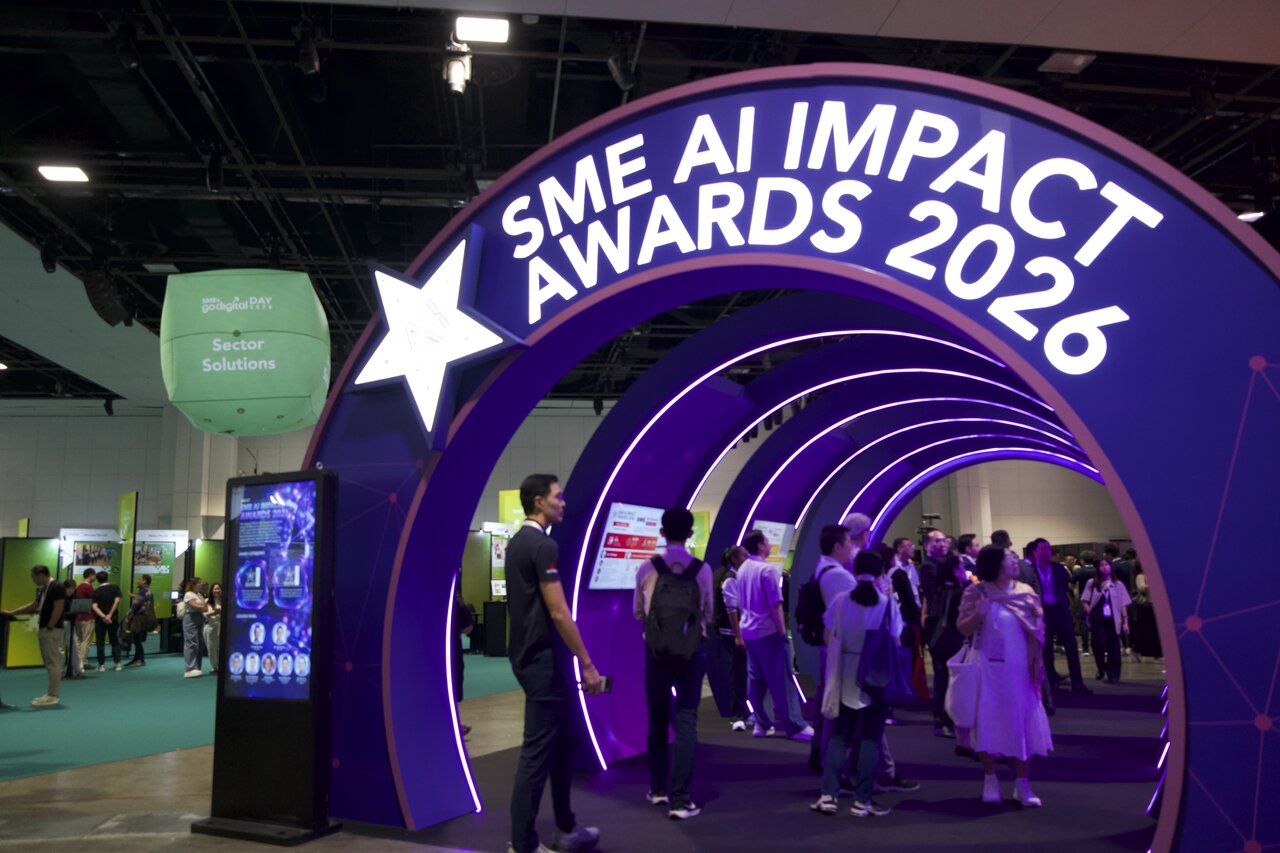
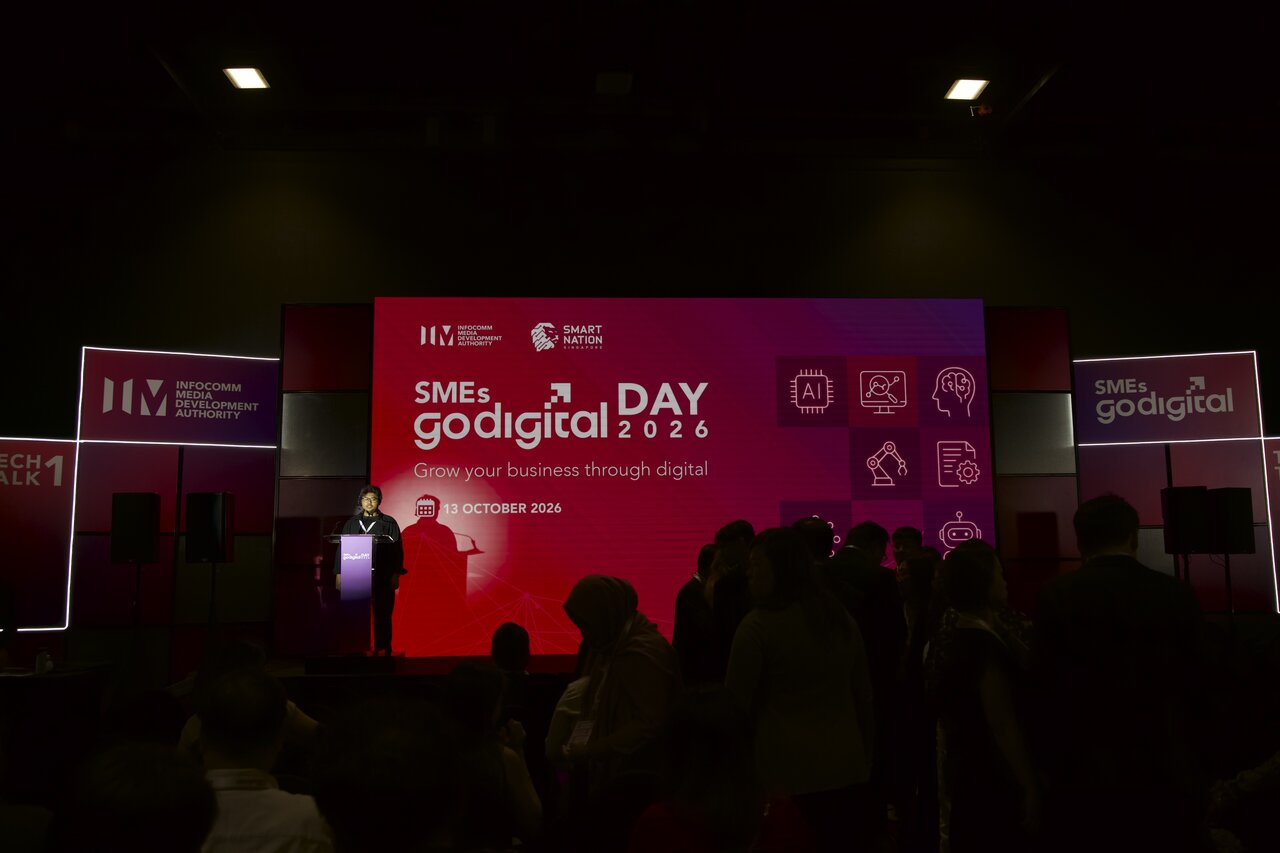
We are proud to share that Hustle Singapore was selected as one of 70 nominees for the SME AI Impact Awards 2026, under the SME Innovation Excellence Award category.
To be recognised alongside some of Singapore’s most innovative SMEs is something our whole team is incredibly proud of.
More importantly, the nomination gave us an opportunity to reflect on something we have been working on quietly over the past year: how we can make AI a practical part of the way our company operates.
For us, AI adoption has never been about using technology for the sake of it. It has been about solving real business problems.
Like many growing SMEs in Singapore, we reached a point where some of our processes were becoming increasingly difficult to scale.
As our training operations grew, so did the amount of coordination required between our operations, academic, finance, marketing and sales teams.
At the same time, our media business had to manage an increasing number of client projects involving strategists, creatives, production teams, project managers and clients.
There were plenty of software platforms available. The problem was that many were either expensive, difficult to customise, or simply did not fit exactly how our teams worked.
So we started asking:
What if the people who understand the operational problem could also help build the solution?
That became the starting point of our AI adoption journey.
We first introduced our teams to tools such as Claude through internal training sessions.
Instead of teaching AI purely through presentations, we organised an internal AI hackathon involving managers from different departments. Each team had to identify an actual problem they faced at work and explore how AI could help solve it.

The objective was simple:
Don't build something because AI is interesting. Build something because it makes work better.
This changed the way our teams approached AI.
Managers who had never previously considered building software began mapping workflows, identifying repetitive processes and experimenting with applications tailored to their departments.
Some ideas remained prototypes. Others gradually became tools that our teams started using in day-to-day operations.
And that was when AI moved from experimentation into actual adoption.
One example is our Training Management Portal.
Hustle manages a large volume of training intakes every month, involving trainer scheduling, course assignments, operational coordination, invoicing and payment matters. Traditionally, many of these processes required information to move between multiple people and systems.
Our team developed a platform designed specifically around the way our training operations work.
The next step is making that system increasingly intelligent: using AI to assist with areas such as trainer matching, scheduling recommendations, identifying potential conflicts and highlighting exceptions that require human attention.
The goal is not to remove people from the process. It is to allow our teams to spend less time coordinating repetitive tasks and more time focusing on learners, trainers and programme quality.
We have taken a similar approach with our media operations.
Managing a content project involves much more than simply tracking deadlines. A single project can require coordination between social media strategists, project managers, creatives, production teams, clients and management.
Our Project Management Portal brings these workflows together, creating a foundation where AI can support different employees at different stages of the project. For example:
The principle behind all of these use cases is the same:
AI should help our existing teams manage more work without operational complexity increasing at the same rate.
For a growing SME, that is where we believe some of the biggest opportunities for AI lie.
One of our biggest takeaways from this journey is that AI transformation does not begin with software. It begins with employees.
The people closest to an operational problem often understand it better than anyone else. Giving them the ability to experiment with AI means solutions can increasingly be developed from the ground up instead of being imposed from the top down.
Our hackathon was therefore not the end result. It was a way to start changing how our employees think about technology.

Instead of asking, "Which software should we buy?", we increasingly ask, "What problem are we trying to solve, and can AI help us solve it differently?"
That mindset has become one of the most valuable outcomes of our AI journey so far.
We are still early in the journey.
Our next phase is focused on making the applications we have built more intelligent, connecting information across different workflows and introducing stronger AI-assisted decision-making.
We are also continuing to train our own employees to use AI confidently and responsibly.
And as a training provider, we hope to bring some of these lessons to the companies that train with us. There is a difference between teaching employees what generative AI is, and helping them identify a business problem, redesign the workflow and actually implement AI at work. Our own experience has reinforced how important that distinction is.
Being recognised as an SME Innovation Excellence Award nominee at the SME AI Impact Awards 2026 is an encouraging milestone for everyone at Hustle.
We may not have walked away with the award this time, but being selected among the nominees has strengthened our conviction that we are heading in the right direction.
AI adoption for SMEs does not always need to begin with a massive technology transformation.
Sometimes it begins with one repetitive process.
One frustrated employee.
One internal experiment.
And one question: Can we build a better way of doing this?
At Hustle, the team believes that to help other companies transform with AI, we first had to get our hands dirty and do it ourselves. Having seen it work within our own teams, we’re now more than confident to help more SMEs take on that same journey.
Help your team find the real problems AI can solve, then build the solution.